
1. Improve safe airflow
Use existing vents and doors only when outdoor conditions and security allow. Keep vents clear, but do not block fire doors, modify ventilation or run unsafe extension leads. A persistent hot, damp or chemical smell may signal a building, fuel, electrical or ventilation issue that needs professional assessment.
2. Remove dust and clutter
Sort stored items, keep walkways and exits clear, and use stable shelving rather than floor piles. Vacuum loose dust with equipment suitable for the material and wear appropriate protection when handling dusty storage. Do not disturb suspected asbestos, chemicals, fuel, sharps or unknown powders; use an authorised specialist.
3. Manage moisture and the floor
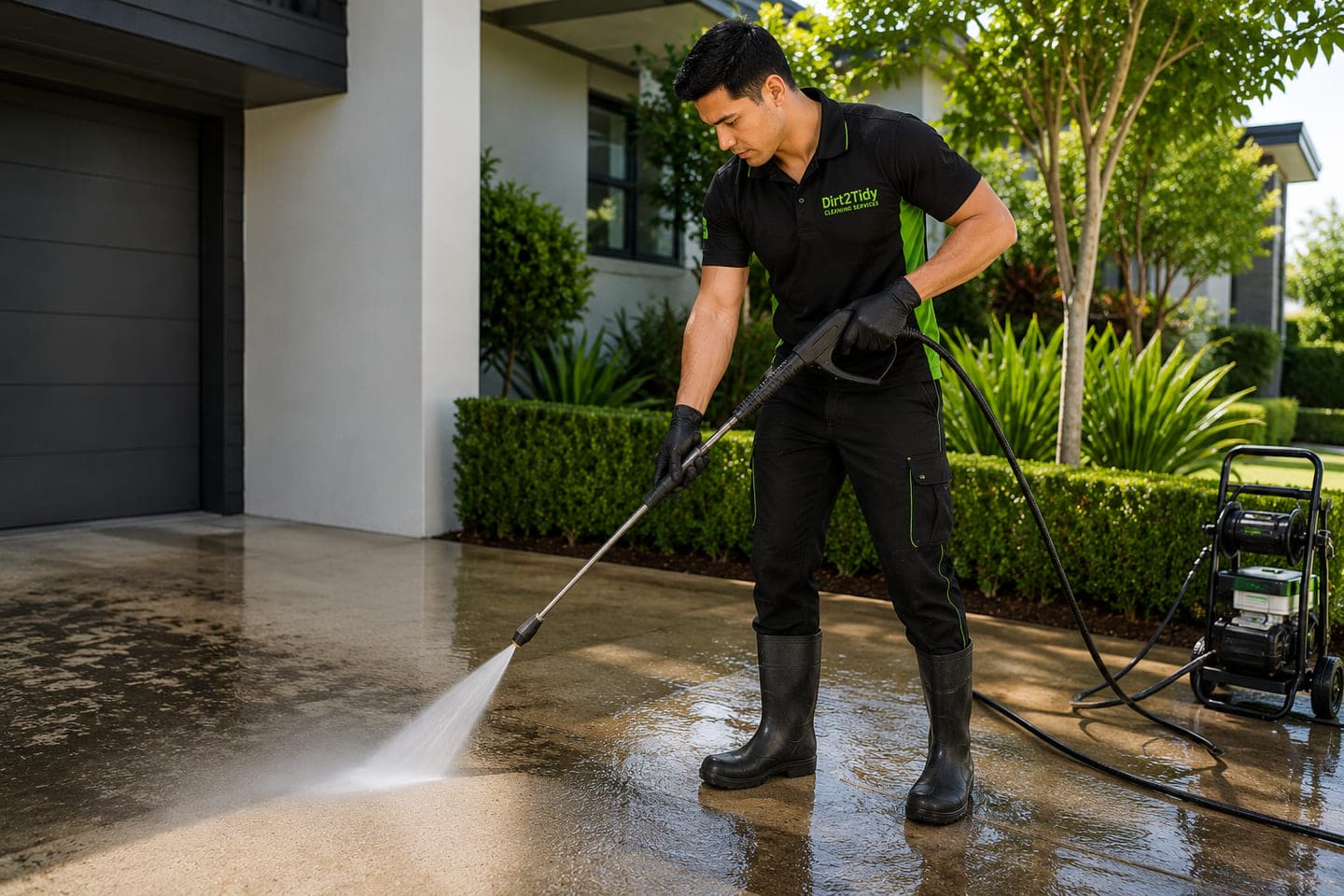
Find the source of leaks, dry ordinary spills promptly and keep cardboard away from damp walls or floors. Match any cleaning method to concrete, coating or tile, and avoid flooding a garage or directing water towards electrical equipment. Drainage and waterproofing are maintenance issues, not ordinary cleaning inclusions.
4. Maintain a practical summer routine
Clean reachable shelves, handles and work surfaces, empty rubbish safely, check stored fabrics for damp odour and keep chemicals labelled and closed. Store products according to their labels and away from heat or incompatible substances. Dirt2Tidy can discuss domestic or pressure-cleaning scope for suitable accessible areas after the risks are removed.