When professional cleaning adds value
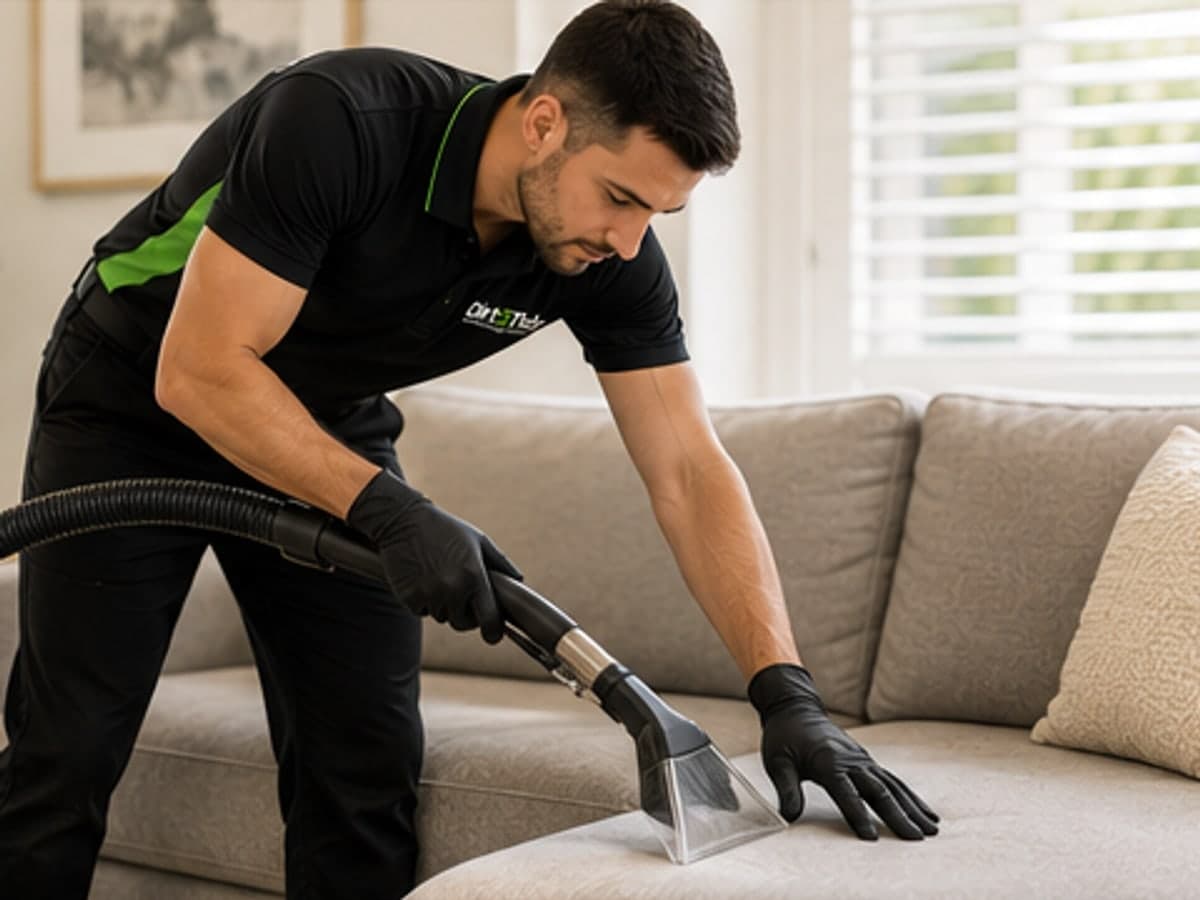
A controlled clean can remove accumulated dust, body oils, food residue, pet hair and suitable stains more thoroughly than surface wiping. It may also help before a move, after a spill or when a frequently used sofa looks dull. The cleaner should inspect the fabric and explain the proposed method before treating the item.
Read the upholstery care code
W generally indicates a water-based method may be suitable, S a solvent-based method, WS either method and X vacuum-only care. These codes are guidance, not permission to flood or scrub the fabric. Check the manufacturer’s instructions, test in a hidden area and disclose previous products, dyes, pet incidents and repairs.
Understand the limits
Cleaning does not repair torn fabric, broken frames, faded dye, permanent bleaching, worn pile or damage inside foam. Excess moisture can cause shrinkage, dye transfer, tide marks or odour. Persistent urine, mould-like growth or water damage may need remediation or another specialist rather than repeated upholstery cleaning.
Prepare for a useful quote
Send the furniture type, fabric or care code, number of cushions, condition, stains, access and drying conditions. Remove fragile items and provide ventilation where safe. Dirt2Tidy can quote upholstery cleaning from the confirmed scope and explain what the selected method can reasonably address.