Read the label before buying and using
Check the intended surface, dilution, contact time, rinsing, ventilation, gloves, first aid and storage instructions. Keep the original label intact and never transfer a chemical into a food or drink container. Do not use a product outside its stated purpose just because it is marketed as natural, green or non-toxic.
Reduce exposure in sensitive homes
Ventilate as the label directs, use the minimum effective amount and allow treated surfaces to dry before children or pets return. Keep children, pets, food and medication away from the work area. People with asthma, fragrance sensitivity or skin conditions may need product choices discussed with their clinician; cleaning advice is not medical advice.
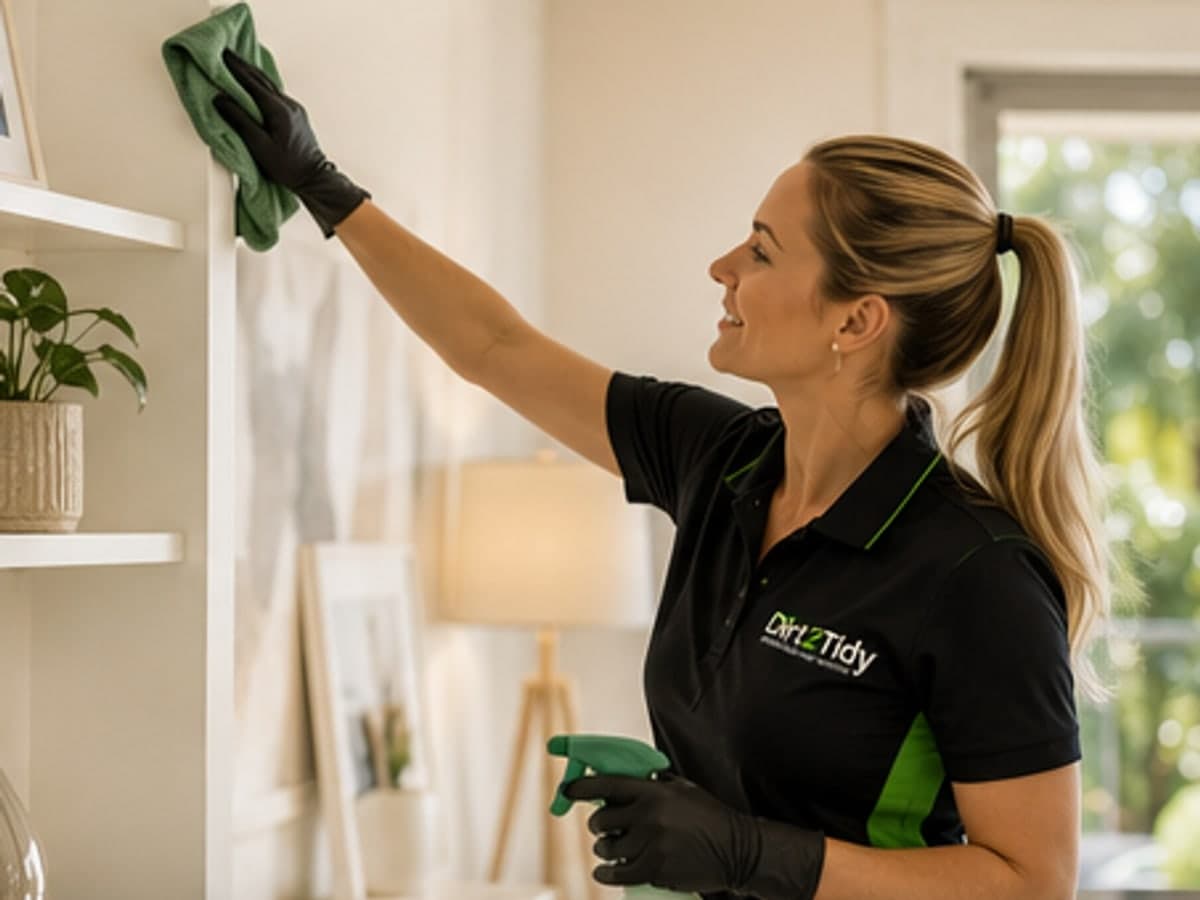
Chemical combinations and storage
Never mix bleach with vinegar, acids, ammonia, disinfectants, drain cleaners or another product. Do not try to neutralise fumes with a second chemical. If fumes develop, leave the area for fresh air and seek poison or emergency advice when appropriate.
Store products locked or out of reach, upright and away from heat, food and incompatible chemicals.
Match the product to the material
Natural stone, timber, aluminium, painted surfaces, plastics and fabrics can react differently to acids, abrasives, solvents and strong alkalis. Test an inconspicuous area, follow the surface manufacturer’s advice and rinse or wipe as directed. A gentler product can still stain or etch a surface if it is unsuitable or left on too long.
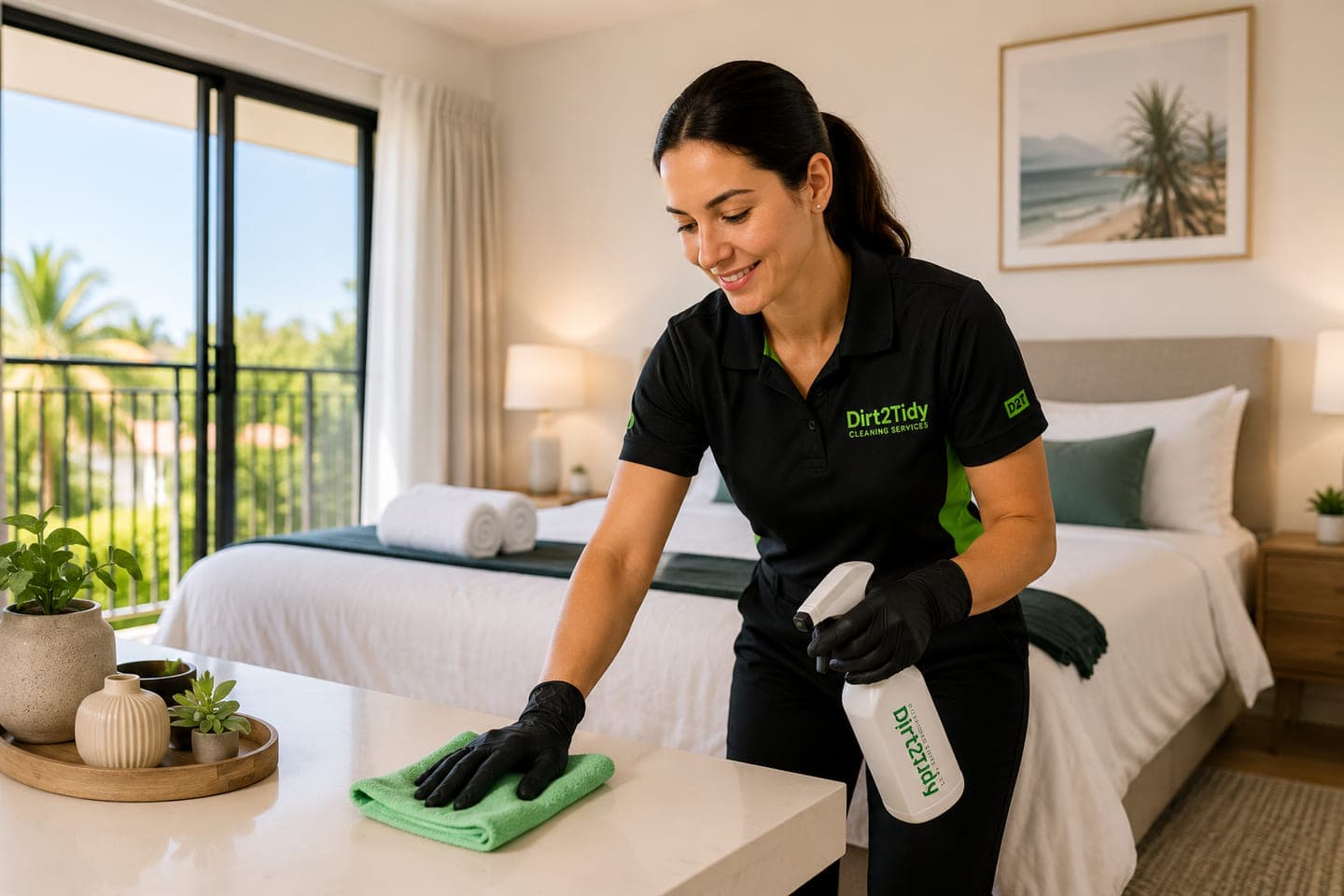
When professional cleaning is useful
Tell Dirt2Tidy about household sensitivities, pets, children and delicate finishes when requesting a domestic quote so the scope can be discussed. A professional clean can reduce accumulated dust and grime, but it is not a medical treatment or guarantee of an allergen-free home. Unknown chemical spills, extensive mould, pests and hazardous contamination need specialist advice.