Read the care code first
Use the manufacturer’s label to identify whether the fabric accepts water-based cleaning, solvent-based cleaning, either method or vacuum-only care. Check the frame, backing, trims and removable covers as well as the main fabric. If the label is missing, test only a conservative dry method or obtain professional advice before wet cleaning.
Remove dust and loose soil
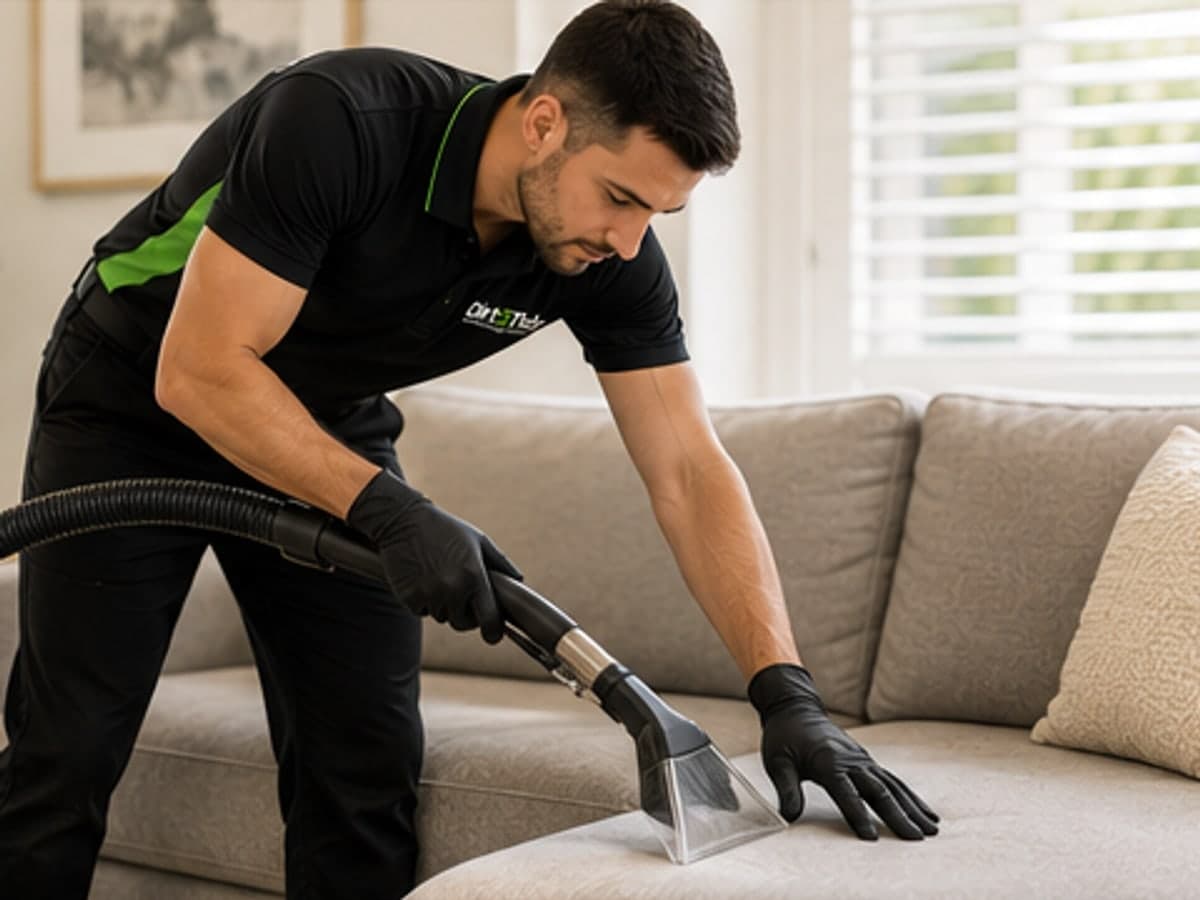
Vacuum cushions, seams, edges and the area beneath removable cushions with a suitable attachment. Brush only when the fabric permits it, and avoid pulling loops or flattening a delicate pile. Rotate cushions according to the furniture instructions and keep direct sun, heat and dampness from damaging the cover.
Treat spills without spreading them
Remove solid material carefully and blot fresh liquid with a clean absorbent cloth. Do not rub, flood the cushion or use a household solvent selected by guesswork. Follow the care label, test in a hidden area and stop if colour transfers, the nap changes or a watermark develops.
Know when professional cleaning is safer
Professional cleaning may help with embedded soil, odour or suitable stains, but it cannot repair tears, faded dye, worn pile, broken frames or contaminated foam. Tell the cleaner about pets, previous products, water damage and the care code. Dirt2Tidy can quote the confirmed upholstery scope.