Identify the carpet and the spill
Record the fibre, backing, colour, pile and manufacturer guidance if known. Identify whether the mark is food, oil, dye, rust, urine, mud or a chemical change, and note its age and previous treatments. Remove solids carefully and blot fresh liquid rather than rubbing it deeper into the pile.
Spot test before full treatment
Choose a product labelled for the carpet and test it in an inconspicuous area. Use the smallest suitable amount and stop if dye transfers, the pile changes, a watermark appears or the backing becomes wet. Never combine bleach, vinegar, detergent, solvent or another cleaner.
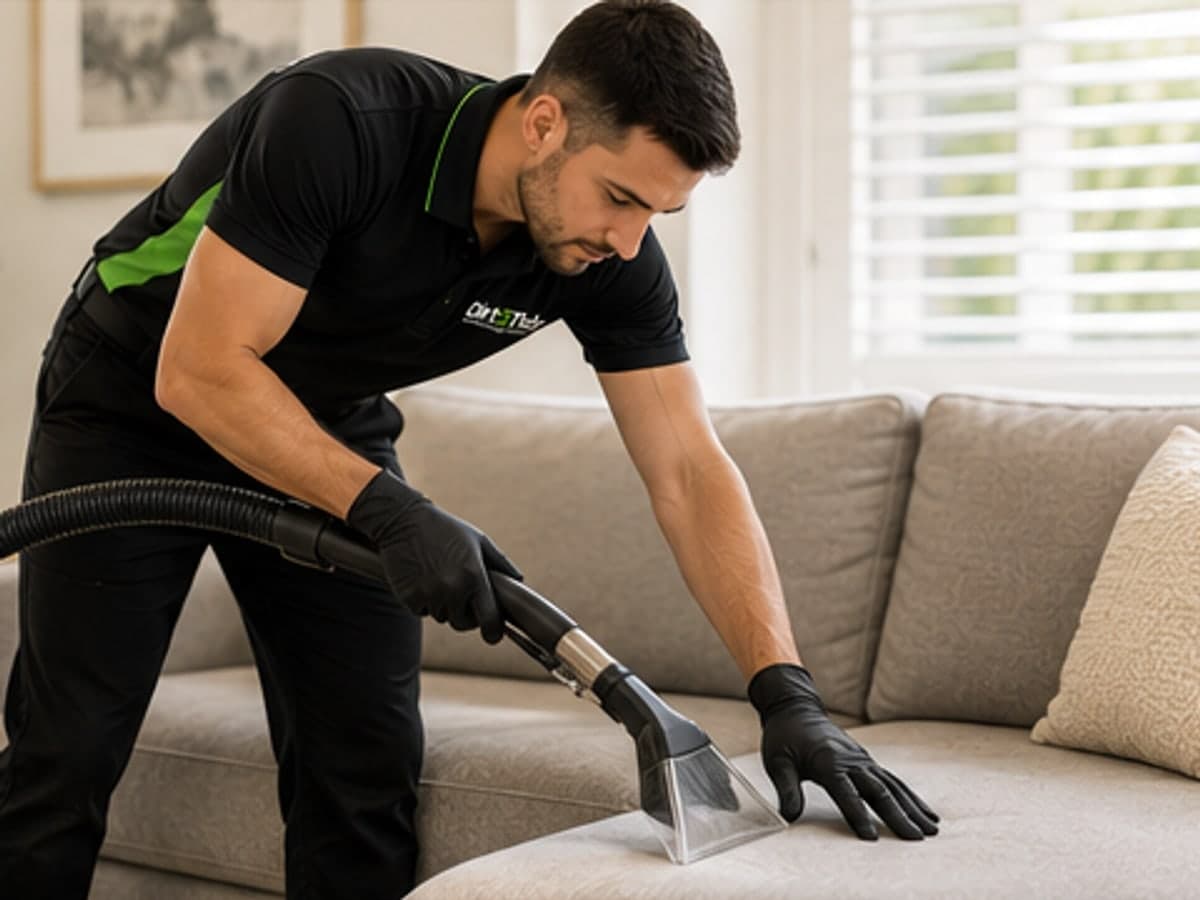
Control extraction and drying
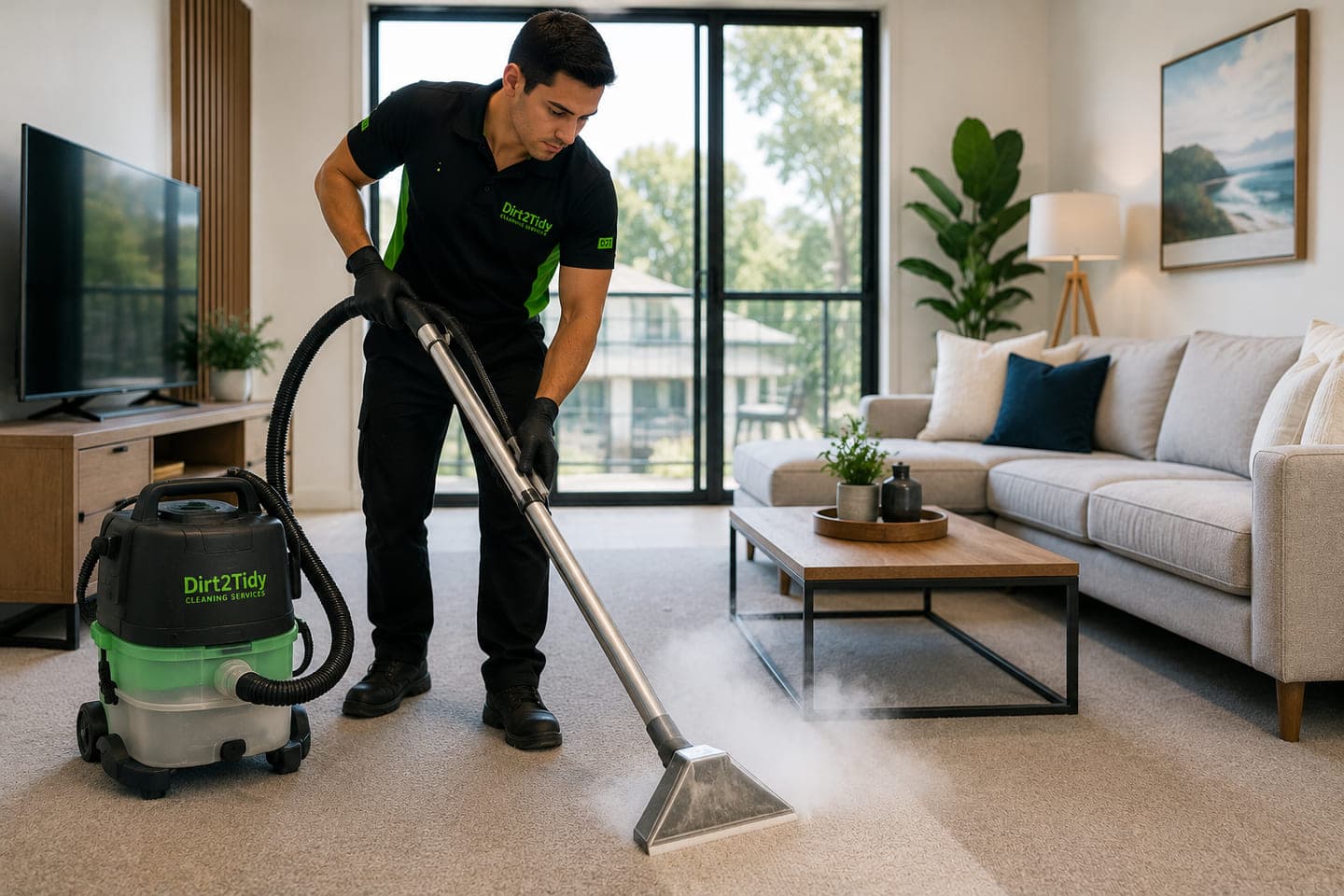
A suitable steam-cleaning process should manage solution, heat, agitation and recovery for the fibre and backing. Avoid over-wetting underlay, keep furniture and traffic controlled while damp and follow the cleaner's drying advice. Residue left behind can attract soil and repeated moisture can create further problems.
Escalate stains with higher risk
Old stains, dye transfer, burns, pet incidents, water damage, odour in underlay, mould-like growth and unknown chemicals need honest assessment. Dirt2Tidy can quote an appropriate carpet-cleaning scope, but no service can guarantee removal or repair of permanent damage.